
What we do
AHI’s overarching mission is to reduce health inequalities by removing the psychosocial and structural barriers to adopt a healthy lifestyle that advantage high-income communities—so that these benefits can be extended to less affluent populations, enabling them to develop and accumulate optimal Health Capital from childhood onwards.
At AHI, we acknowledge the impact of poverty on health, and understand one cannot eradicate poverty proximately, therefore we facilitate access to schoolchildren to the necessary tools not available in low-income communities to maximise their chances to fulfil their potential and flourish.
The AHI Health Promoting School (HPS) intervention directly addresses Julian Tudor Hart’s Inverse Care Law, which states that “those who most need medical care are least likely to receive it, while those with least need of health care tend to use services more and more effectively.”
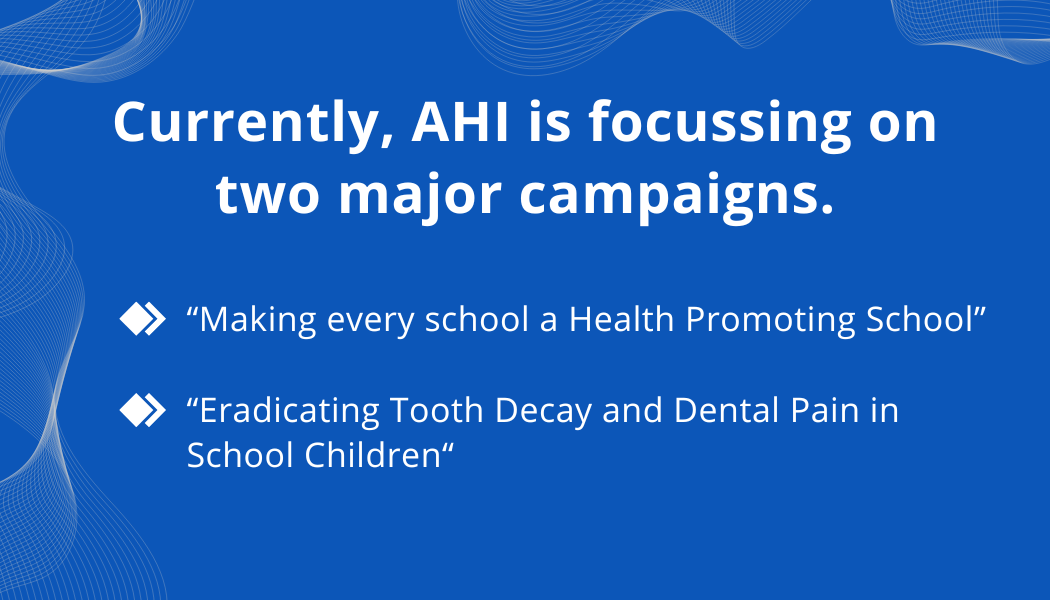
The first campaign directly supports the WHO–UNESCO Global Standards for Health-Promoting Schools (2021), operationalising the call to embed health promotion into school policies, environments, curricula, and WASH initiatives [3,4].
The second campaign responds to the World Health Assembly Resolution WHA74.5 on Oral Health (2021), which urges Member States to integrate oral health into Universal Health Coverage (UHC) and to prioritise preventive, population-based approaches. This latter initiative offers a cost-effective, “best buy” school intervention that operationalises the newly proposed WHO Oral Health Action Plan.
Together, these campaigns advance the Sustainable Development Goals (SDGs)—particularly Goal 3 (Good Health and Well-Being) and Goal 10 (Reduced Inequalities)—by promoting equitable access to essential health interventions.
The AHI designed a novel Health-Promoting School (HPS) intervention that operationalises the principles of the Ottawa Charter for Health Promotion [1] and embedded a dental care intervention to its HPS model. The full model includes nine interlinked interventions.
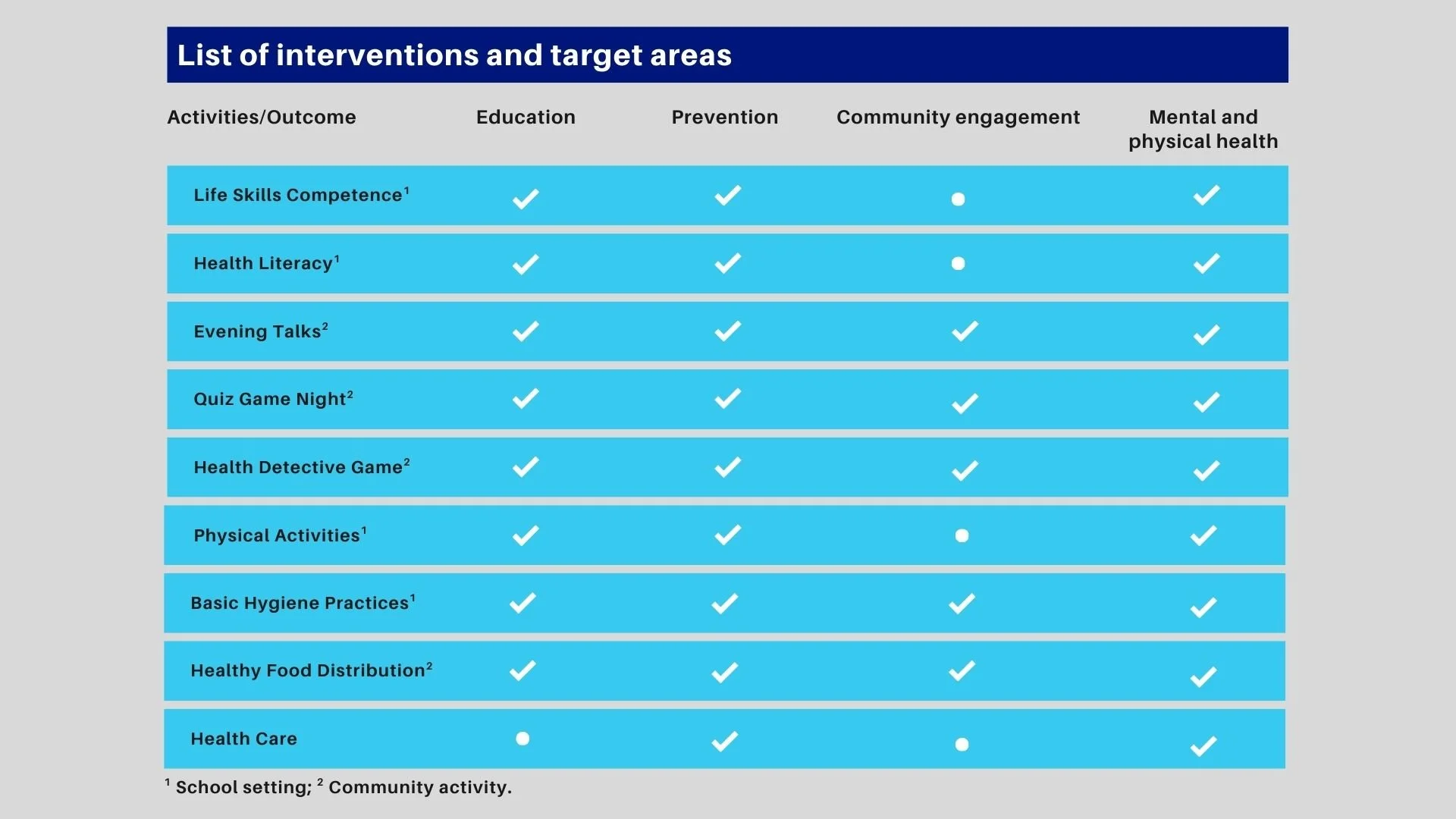
The intervention is firmly grounded in international health and education agendas and is strategically aligned with the World Health Organization (WHO), UNESCO, and UNICEF frameworks for integrated child health promotion.
References
1. World Health Organization. Ottawa Charter for Health Promotion. Geneva: WHO; 1986.
2. World Health Assembly. Resolution WHA74.5: Oral Health. Geneva: WHO; 2021.
3. WHO/UNESCO. Global Standards for Health-Promoting Schools. Geneva: WHO; 2021.
4. UNICEF. Strategy for Water, Sanitation and Hygiene (WASH) 2016–2030. New York: UNICEF; 2016.